Key Takeaways
- Black Friday scam websites rose 89% in one year, and phishing emails impersonating major retailers rose more than 2,000% during peak holiday shopping.
- Paying by credit card gives you dispute rights that debit cards, Zelle, wire transfers, crypto, and gift cards do not.
- Federal law gives you 60 days from the statement date to dispute a credit card charge. Visa typically allows 120 days from the transaction date.
- Legitimate carriers do not text links asking for payment or personal information. USPS never includes links in its tracking texts.
Why the Holidays Are Scam Season
Scammers go where the shoppers go. Between Black Friday and Cyber Monday, we’re all hunting for deals, expecting packages, and moving fast, and that’s exactly when criminals step up their efforts to take advantage of distracted, bargain-hunting consumers. Nearly every scam below can only work when you are making quick, emotional decisions, rather than stopping to think the situation through. So we have a simple recommendation: slow down. Even just a little. And talk with family and friends whenever anything seems off to get a second opinion.
And if you are ready for a bit more detail, here are the six things we’d most like you to remember. For the full picture, see our guide to shopping safely during the 2026 holiday season.
1. Fake and Lookalike Stores
Scammers can now build a convincing storefront in a matter of hours, complete with polished graphics, believable-looking AI-written copy, and product listings lifted from real retailers. The listings may be of legitimate, branded products; usually, the scam is that you will never receive them. They may also copy a store you already know, down to the logo, and use a web address that’s just a few letters off.
Before you buy from a store you don’t know:
- Check the domain age. A free WHOIS lookup shows when the site was registered. A site that’s three weeks old and advertising 70% off name brands is a site to run away from (digitally speaking).
- Look for real contact info. You want a street address (not just a city), a phone number that reaches an actual person, and an email on the store’s own domain.
- Verify reviews elsewhere. Reviews on the store’s own site are the easiest to fake. Check Google, the Better Business Bureau, or Trustpilot instead.
- Read the return policy first. No policy, or “all sales final” on ordinary merchandise, is a huge red flag.
- Inspect the web address. Read it character by character before you log into it or check out. If it is almost the URL you expect but has anything added, removed, or changed, close the tab and go to the real site directly.
And it’s worth noting the padlock and “https” only mean your connection is encrypted. They say nothing about whether the seller is honest.
Want the full walkthrough? Read How to Tell If an Online Store Is Legitimate Before You Buy.
2. Deals That Are Too Good to Be True
A steep discount isn’t automatically a scam (though it usually is!), but a big discount plus a countdown timer or “only 2 left!” banner should make you suspicious. Scammers use urgency because the fear of missing out can overwhelm the fear of being scammed. Here’s a quick test: search the same product at two or three retailers you already trust. If the “deal” is 60% or more below everyone else, you are much better off assuming it’s a scam.
Also watch for fine print. The scam may involve unexpected “processing fees,” a hard-to-cancel monthly subscription, or a return policy that disallows returns or has you paying to ship items overseas.
Not every deal is a scam, either. Some Black Friday “sales” are just clever and unscrupulous marketing for a disappointing reality. In fact, for some products, the lowest price of the year may have come in the summer.
More detail: 6 Red Flags That an Online Deal Is Too Good to Be True.
3. Counterfeit Goods
Even a very legitimate-looking store can sell you a fake. U.S. Customs and Border Protection seized nearly 79 million counterfeit items in fiscal year 2025, and the vast majority arrived through packages sent to individual consumers by mail or express courier. Here’s a quick overview of popular item categories that counterfeiters sell:
- Electronics: A UL, ETL, or TUV mark isn’t proof of anything on its own, because counterfeiters are happy to fake them. Check workmanship, labels (typos, crooked logos), packaging, and documentation, and remember it’s usually several small inconsistencies, not one obvious giveaway. When in doubt or suspicious, we recommend you stay away entirely from that potential purchase. Counterfeiters typically tempt consumers with low prices, but remember that the potential deal is not worth the risk.
- Supplements: The FDA doesn’t pre-approve them. Look for USP or NSF seals, then verify that claim on the NSF’s or USP’s own site.
- Luxury goods: Buy through the brand’s published list of authorized retailers.
- Everything: Search the seller or product name plus “fake” or “counterfeit,” since positive reviews don’t settle the question. If you don’t find evidence they are counterfeiters, that is not evidence they are legitimate. Buying from an unknown retailer comes with inherent risk.
Bargain-priced brand names can be counterfeit or stolen, and importing counterfeit goods can carry legal penalties for the buyer, too.
Category-by-category tips: How to Avoid Buying Fake Counterfeit Goods Online.
4. Fake Package Delivery Texts
The FTC reported that fake delivery texts were the most commonly reported text scam in 2024, as consumers lost $470 million to text scams overall. They work because many of us are waiting on something to be delivered at any given moment.
The rules to remember:
- USPS won’t text you unless you requested updates for a specific tracking number, and even then the message contains no link. A USPS text with a link is a scam.
- FedEx only texts if you enrolled in Delivery Manager or signed up for SMS tracking.
- UPS only texts if you opted in, and real texts come from short codes 75137 or 24031, not a 10-digit number.
- None of them will ask for a Social Security number, a login, or a “small redelivery fee” by text.
What to do: Don’t click any links. Instead, type the carrier’s website into your browser yourself and enter your tracking number. Don’t reply (not even “STOP”; scammers don’t care about antsettingi-spam laws). Here’s what you should do: delete the message and forward it to 7726 (SPAM). You can also report at ReportFraud.ftc.gov, and USPS-related texts can be emailed to [email protected].
Full breakdown: What You Need to Know About Package Delivery Scams.
5. Phishing Emails
The oldest online fraud tricks are still around! Phishing emails are a real threat, as they have been for decades. Here’s an example: An email claims a sale ends tonight, or perhaps that your account has been compromised and you must log in right away. Don’t click on anything in the email, even if it does look legitimate. Go to the retailer directly rather than tapping a link or ad.
6. How You Pay Matters More Than You Think
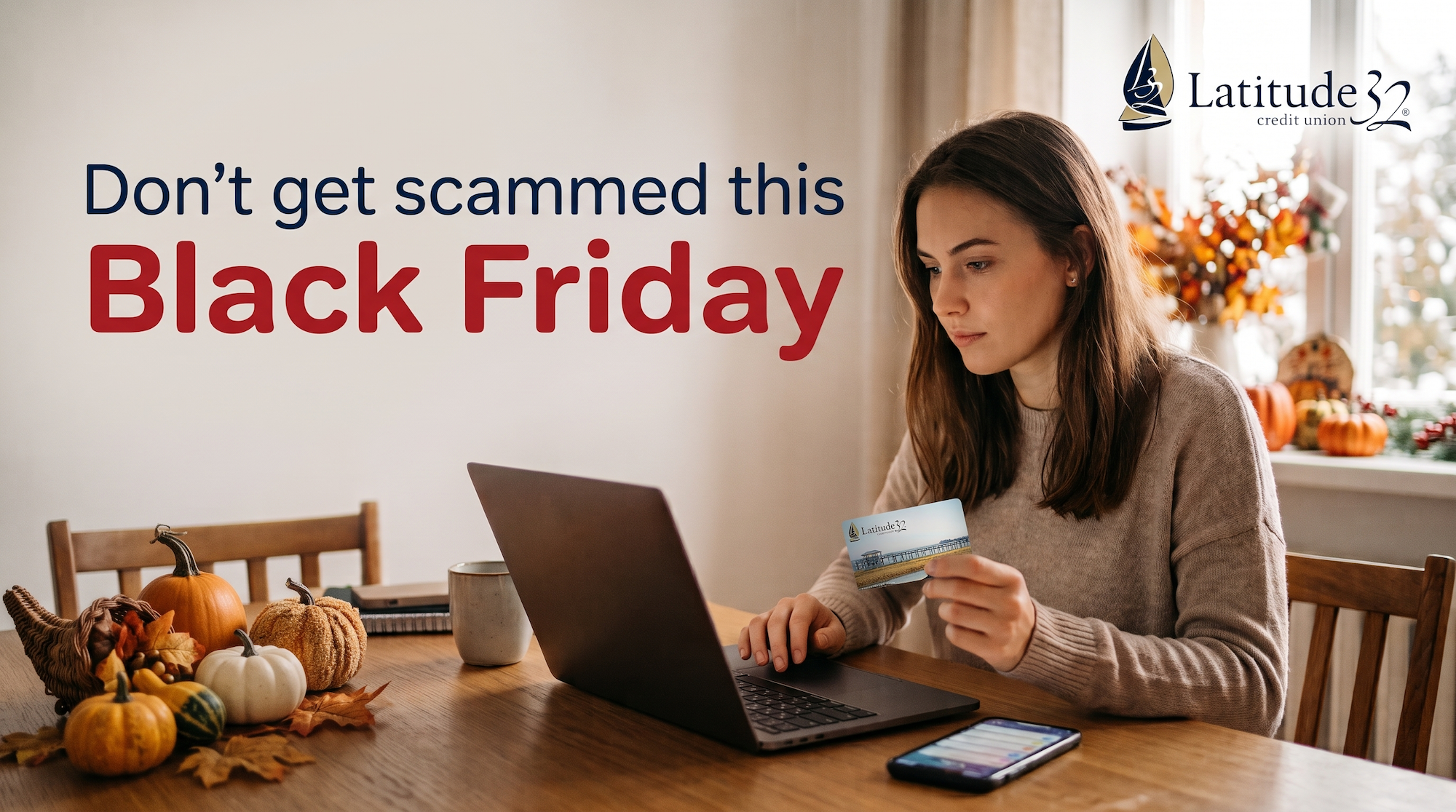
This is the single most important habit on the list. When paying online, we recommend that you pay by credit card.
- Credit cards are covered by Regulation Z. Your liability for unauthorized charges is capped at $50, and Visa’s Zero Liability policy typically brings it to zero. You can also file a chargeback for goods that never arrive or aren’t as described.
- Debit cards are covered by Regulation E, which gives weaker protection and a narrower window. Wait more than 60 days to report unauthorized use and you could be liable for the full amount. Protection is also thinner when you willingly paid a seller who turned out to be a fraud.
- Zelle, Venmo, wire transfers, and gift cards are effectively irreversible. That’s exactly why scammers ask for them. A seller who insists on one of these is telling you they don’t want you to be able to get your money back.
Why it matters: Why You Should Always Pay With a Credit Card Online.
Your Pre-Checkout Checklist
- Did I navigate here myself, or did I click through from an ad, text, or email?
- Does the web address match the real brand’s URL?
- Is the price believable compared with trusted retailers?
- Can I find a real address, phone number, and return policy?
- Am I paying by credit card?
If Something Goes Wrong
If you entered account or payment information on a suspicious site or link, contact Latitude 32 right away. The sooner we know, the more options you have. If you shared your Social Security number or date of birth, consider placing a fraud alert or credit freeze with Equifax, Experian, and TransUnion. Afterwards, read your statement line by line to ensure no fraudulent charges are missed.
Shop With a Card That Protects You
The Latitude 32 Visa carries a fixed rate as low as 12.90% APR (as of November 2026) that has held for over a decade, with no annual fee, no balance transfer fee, and no penalty rate, plus Visa Zero Liability protection and full dispute rights. Learn more or apply for the Latitude 32 Visa, or stop by any of our Charleston-area branches to say hello!