
Key Takeaways
- Real government agencies never demand payment by wire transfer, gift card, cryptocurrency, or payment app — ever, for any reason.
- The IRS always contacts you by mail first. It will not call, text, or email you about a tax bill out of nowhere.
- Social Security will never threaten to suspend your number or benefits over the phone.
- AI voice-cloning tools can now recreate a loved one’s voice from just a few seconds of audio, making “family emergency” calls far harder to dismiss on sound alone.
- If you’re pressured to act immediately and told to keep it secret, hang up and verify independently — using a number you already know is correct, never one the caller gives you.
- Report these scams to ReportFraud.ftc.gov and the SC Attorney General’s Office.
There are two very common fraudulent calls people fall victim to. One type calls to say that you owe back taxes and a warrant is being issued in your name. The other is (apparently) your grandson, crying, saying he’s in some kind of distress and needs bail money tonight.
On the surface, these two scams seem very different. In reality, they could even be the exact same scammers wearing two different masks. Understanding what unites the two makes both of them much easier to spot and avoid.
Why These Scams Work
Identity and Urgency
Government impersonation and fake emergency scams both rely on the same trick: get you to act before you have time to think. One uses the identity, and therefore the authority, of a government agency to make you too afraid to say no. The other uses the identity of someone you love who is supposedly in trouble, again with the goal of making you too afraid to say no. Both depend on urgency to trigger a more emotional decision in their favor. This is why smart people are still at risk of fraud. The fix for both is identical: slow down and verify any claims independently. Do not share any information or pay any money without telling both your loved ones and your financial instituion first Any legitimate caller would be happy for you to do that first. Scammers, on the other hand, will do everything they can to dissuade you and keep you talking with them, alone.
Government Impersonation Scams
How Scammers Make Contact
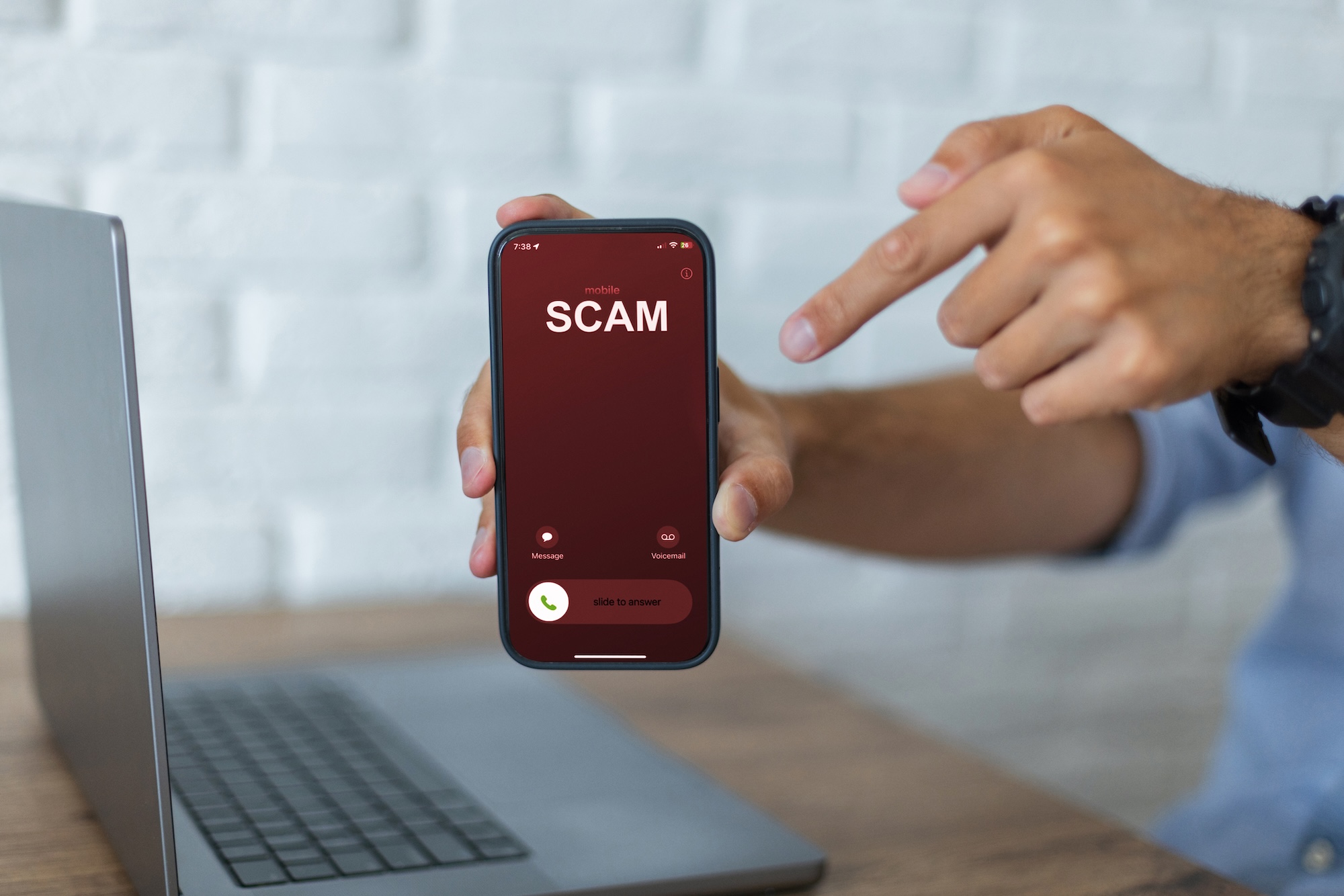
These scams typically arrive by phone, email, text, or social media message. Scammers often open with a completely fabricated “employee ID number” to sound official, and they may already have personal details — your name, your address, even your Social Security number — pulled from a data breach or a people search site, which makes the call feel believable instead of like the scam it is. Caller ID can be spoofed to display a real agency’s name and number, so seeing a particular name or number on your screen does not prove anything about who your caller actually is.
Agencies Most Commonly Impersonated
According to the FTC, the most frequently impersonated agencies include:
- Social Security Administration (SSA): Claims your Social Security number or benefits will be suspended unless you pay immediately, sometimes with threats of arrest.
- IRS: Claims you owe back taxes and threatens arrest, deportation, or license revocation. They often cite your Social Security or tax ID number which the scammer has obtained beforehand to make the call more believable and frightening.
- Medicare: Asks for your Medicare number or bank details, either to “issue” a new card or to resolve a medical equipment charge you don’t recognize.
- The FTC itself: Scammers pose as the FTC’s “Refund Department” or invent a fake agency entirely, such as a “National Sweepstakes Bureau,” sometimes using real FTC employee names to add credibility.
Scammers will also pose as:
- Local law enforcement and courts: Fake warrants or missed-jury-duty notices.
- USCIS and immigration authorities: Threats tied to immigration status.
Red Flags
- Demands for payment (especially immediate payment) or personal information
- Threats of arrest, lawsuits, deportation, or loss of benefits
- Requests or demands to send money by wire transfer, gift card, cryptocurrency, or payment app
- Unexpected contact from an agency you haven’t reached out to
- Links in unsolicited texts or emails
- Instructions to press a key on a robocall to “speak to an agent”
What Real Government Agencies Will (and Won’t) Do
This is the single most useful thing to memorize, because it applies no matter which agency the scammer claims to be:
- SSA will never threaten to suspend your number or benefits, and won’t ask for payment or personal information by phone, email, text, or social media.
- IRS contacts you by mail first, always. It won’t call, text, or email demanding payment, and it won’t call about taxes without a prior scheduled appointment. If private debt collectors are ever used on the IRS’s behalf, they contact you only after two mailed letters — and they never ask for payment over the phone.
- Medicare sends cards automatically at no cost and will only call to help you if you previously called 1-800-MEDICARE to ask for help.
- FTC never asks for money or threatens arrest. If you’re ever owed a refund, it arrives as a check, prepaid debit card, or PayPal payment, and you never have to pay a fee to receive it.
- As a general rule, no legitimate government agency will ever demand payment by wire transfer, gift card, cryptocurrency, or payment app. Any call that does is absolutely a scam.
Fake Emergency (“Grandparent”) Scams
How It Unfolds
A caller claims to be a relative (often a grandchild) in trouble. The scammer often claims to have experienced a car accident, an arrest, or to be in a hospital in another city. Sometimes a second caller joins in, posing as a lawyer, police officer, or doctor to make the story feel verified. But these are scammers; your actual relatives are not in trouble at all.
Where They Get Your Details
Scammers piece together enough real information, such as your name, where you live, your grandchild’s name, then use it to make the story sound legitimate enough to make you panic. They do this in any number of ways, including from social media, a hacked family email account, or simple guesswork.
Why AI Voice Cloning Is Changing the Game
This is the part that’s gotten harder to dismiss in the last couple of years. The FBI’s Internet Crime Complaint Center (IC3) warned in a December 2024 public service announcement that criminals are now using generative AI to clone a real person’s voice from just a few seconds of audio — often pulled from a public social media video — and use it to “impersonate a close relative in a crisis situation” demanding immediate money. IC3’s recommended countermeasure is simple: agree on a secret word or phrase with family members in advance, one a scammer couldn’t guess or fake, so you have a fast way to verify who you’re really talking to.
The Secrecy Request
If the caller insists you keep the situation quiet and not call other family members, treat that as a red flag to hang up. Scammers ask for secrecy specifically because a second phone call or another person are all it takes to make the scam fall apart.
Red Flags
- Urgent demands for money, especially framed as “right now” or “before it’s too late”
- Claims that you’re the only person who can help, for whatever reason
- Pressure to keep the situation secret from other relatives
- Requests to pay by wire transfer, cryptocurrency, payment app, or gift card numbers read over the phone
- A voice that sounds familiar but a story that seems strange
The Shared Playbook: How to Verify Any Urgent Call
Whether the caller claims to be the IRS or your grandson, the response is the same:
- Hang up. You don’t owe anyone an explanation for ending a call that doesn’t feel right.
- Never call back at the number the caller gave you. Call the agency or the relative back using a number you already know is correct, from a bill, a card, or a saved contact. Caller ID can be and often is faked.
- For a family emergency call, ask something only the real person would know, or use a pre-agreed secret word per IC3’s recommendation above.
- Call a relative. This is even more important if you are told to keep it secret. A second call is often the fastest way to confirm nothing is wrong and that you have escaped from being scammed.
- Treat any request for wire transfer, gift card, cryptocurrency, or payment app as confirmation it’s a scam. No legitimate emergency or government debt requires payment in one of these forms.
- Slow down. Real emergencies and real government debts do not require payment in the next ten minutes. Call a friend or relative and tell them about the suspicious call.
What to Do If You’ve Already Sent Money or Shared Information
- If you shared card or credit union account information, or a transfer was made from your Latitude 32 Credit Union account: Call Latitude 32 immediately at (843) 556-4809. The sooner we know, the faster we can act.
- If you sent a wire transfer, cryptocurrency, or gift card payment: Contact the transfer service, exchange, or retailer right away — our guide to wire transfer and instant payment scams covers next steps in detail.
- If you shared a Social Security number or other personal information: Visit IdentityTheft.gov for a step-by-step recovery plan.
- If the scam involved the SSA: Report it to the SSA Office of the Inspector General.
- If the scam involved the IRS: Report it to the Treasury Inspector General for Tax Administration (TIGTA).
- If the scam involved Medicare: Call 1-800-MEDICARE (1-800-633-4227).
How to Report These Scams
Beyond the agency-specific channels above, report government impersonation and fake emergency scams to the FTC at ReportFraud.ftc.gov and to the South Carolina Attorney General’s Office. These reports help investigators spot patterns and shut scam operations down.
Frequently Asked Questions
Does the IRS ever call to demand immediate payment?
No. The IRS contacts you by mail first and will not call, text, or email demanding payment. Any call threatening arrest over unpaid taxes is a scam.
Will Social Security really suspend my number if I don’t pay?
No. The SSA will never threaten to suspend your Social Security number or benefits, and won’t request payment or personal information by phone, email, text, or social media.
How do scammers clone a voice?
According to the FBI’s IC3, generative AI tools can recreate a convincing voice clone from just a few seconds of audio, often pulled from a public social media video, which scammers then use to impersonate a relative in a fake emergency call.
What should I do if I already sent money to a fake “grandchild”?
Contact Latitude 32 right away if the payment came from your account, and contact the transfer service or retailer immediately if you paid by wire, gift card, or cryptocurrency. The sooner you act, the better your chances of recovery.
Is it ever okay to pay a government agency or a relative in crisis with a gift card?
No. No legitimate government agency or genuine emergency requires payment by gift card. A request for gift card numbers read over the phone is one of the clearest signs of a scam.
How do I verify a government call is real?
Hang up and call the agency back using a number you look up yourself, from the agency’s official website or a prior piece of mail. Never use a number or link that the caller gave you.
We’re Here to Help
If you ever receive a call like this — or you’re unsure whether some communication you’ve received is legitimate — call Latitude 32 at (843) 556-4809. For more on protecting yourself and your accounts, visit our Fraud Prevention & Cybersecurity Resource Center.